
The Rigveda from praise" and veda "knowledge") is an ancient Indian collection of Vedic Sanskrit hymns along with associated commentaries on liturgy, ritual and mystical exegesis. It is one of the four sacred canonical texts of Hinduism known as t...
अधिक पढ़ेंविक्रेता
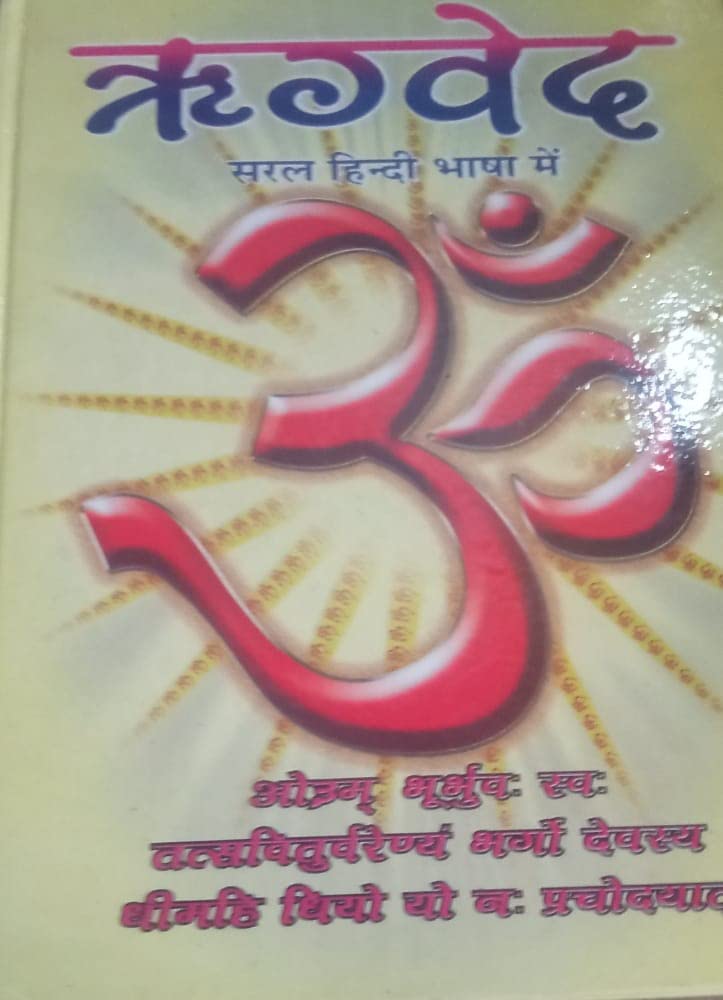
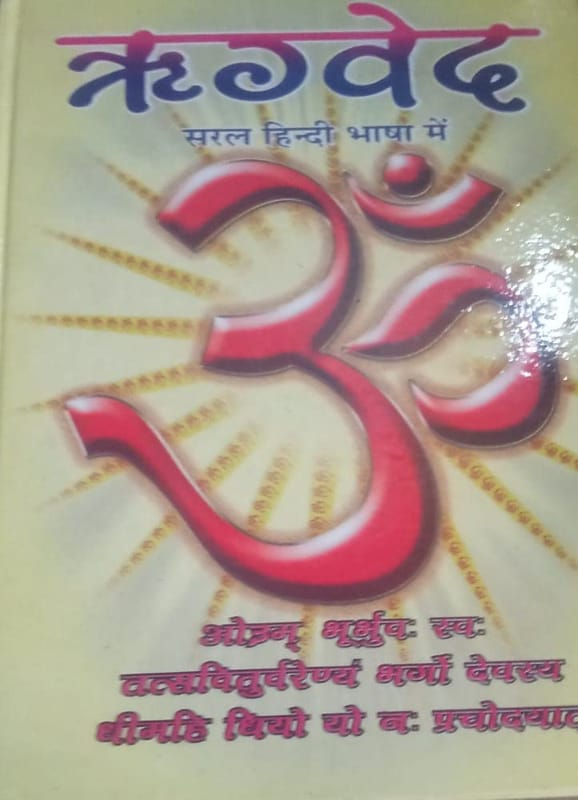
Rigved Book in Big Size & Bold Letters (hindi Hardcover – 30 December 2021)
मुख्य विशेषताएं
| उद्गम देश | भारत |
|---|---|
| ब्रैंड | genric |
| शुद्ध मात्रा | NA |
| निर्माता या पैकर का नाम | genric |
The Rigveda from praise" and veda "knowledge") is an ancient Indian collection of Vedic Sanskrit hymns along with associated commentaries on liturgy, ritual and mystical exegesis. It is one of the four sacred canonical texts of Hinduism known as the Vedas. The core text, known as the Rigveda Samhita, is a collection of 1,028 hymns in about 10,600 verses eponymous of the name Rigveda), organized into ten books In the eight books that were composed the earliest, the hymns are mostly praise of specific deities. The younger books (books 1 and 10) in part also deal with philosophical or speculative questions, with the virtue (charity) in society and with other metaphysical issues in their hymns. The oldest layers of the Rigveda Samhita are among the oldest extant texts in any Indo-European language, perhaps of similar age as certain Hittite texts. Philological and linguistic evidence indicates that the bulk of the Rigveda Samhita was composed in the northwestern region of the Indian subcontinent, most likely between c. 1500 and 1200 BC, although a wider approximation of c. 1700–1100 BC has also been given. The initial codification of the Rigveda took place during the early Kuru kingdom (c. 1200–900 BC). Some of its verses continue to be recited during Hindu rites of passage celebrations (such as weddings) and prayers, making it probably the world's oldest religious text in continued use. The associated material has been preserved from two shakhas or "schools", known as ?The school-specific commentaries are known as Brahmanas (Aitareya-brahmana and Kaushitaki-brahmana) Aranyakas (Aitareya-aranyaka and Kaushitaki-aranyaka), and Upanishads (partly excerpted from the Aranyakas: Bahvrca-brahmana-upanishad, Aitareya-upanishad, Samhita-upanishad, Kaushitaki-upanishad).
| उद्गम देश | भारत |
|---|---|
| ब्रैंड | genric |
| साधारण नाम | RigVed Book In Big Size & Bold Letters (Hindi Hardcover – 30 December 2021) |
| शुद्ध मात्रा | NA |
| निर्माता या पैकर का नाम | genric |
| निर्माता या पैकर का पता | IN |
| निर्माण तिथि | 12/2022 |
| संपर्क विवरण उपभोक्ता देखभाल | Chopra book store, [email protected] |