
The mat at the door that has always been made from what was left over The Paypusani — the cotton doormat at the entrance of a Maharashtrian home — is one of those objects that has a clear logic behind it. It is made from recycled cotton strips, wh...
Read MoreHandcrafted Door Mat | Durable Non-slip Entrance Floor Mat | Indoor & Outdoor Use (paypusani)
The mat at the door that has always been made from what was left over
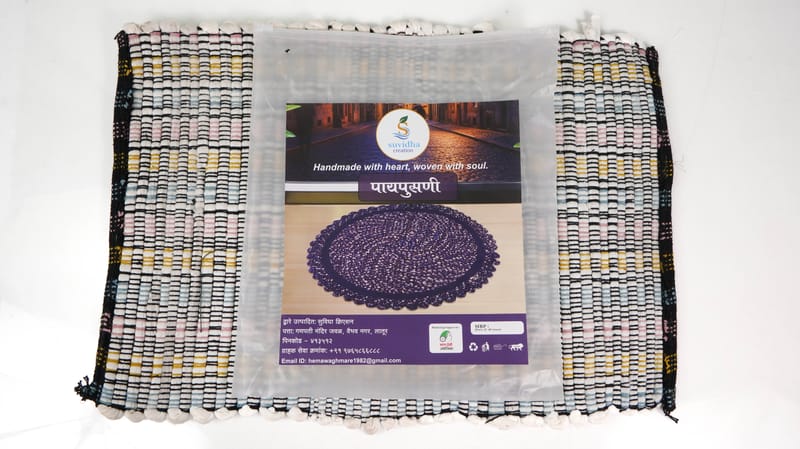
The Paypusani — the cotton doormat at the entrance of a Maharashtrian home — is one of those objects that has a clear logic behind it. It is made from recycled cotton strips, which means the cloth that would otherwise become waste becomes something useful. It is woven on a loom, which gives it the density and structural integrity to withstand daily use under foot traffic. And it is placed at the threshold, which is where the outside world and the inside home meet — a practical object in a position that also carries meaning. Suvida Creation's Paypusani is made in this tradition: handwoven from cotton thread and recycled fabric strips into a mat that does its job well and comes from a process that wastes nothing.
How it is made
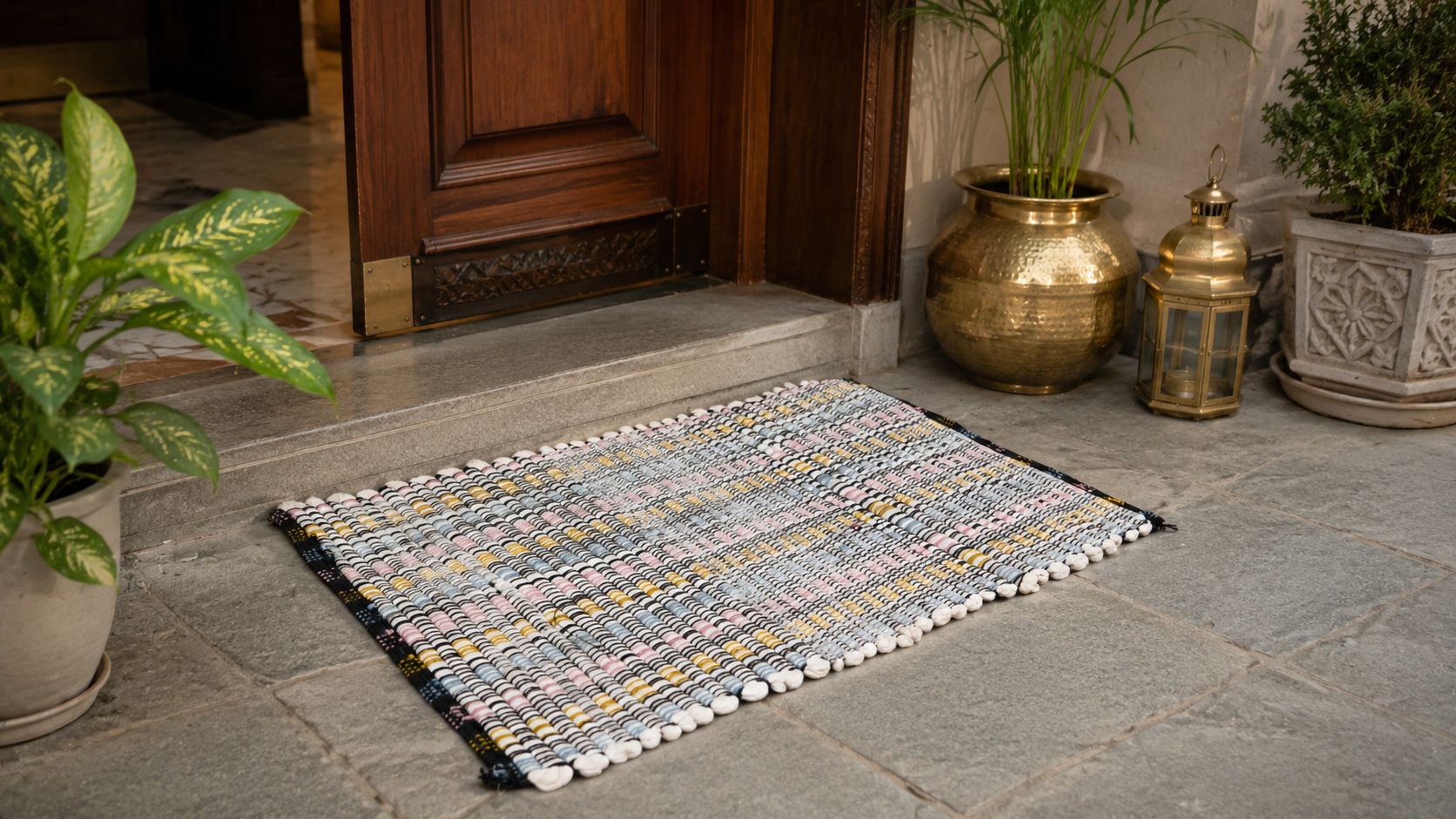
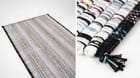
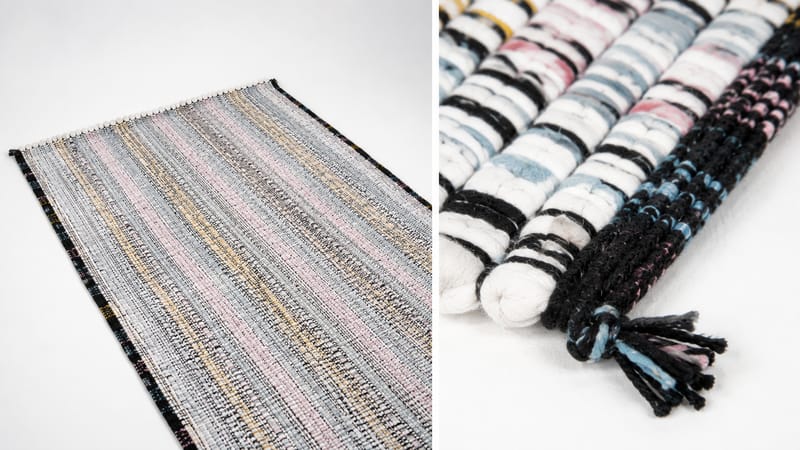
The Paypusani is woven on a loom using a chindi or rag-rug technique — one of the oldest forms of textile recycling in Indian craft. A strong warp thread is stretched across the loom, and strips of cotton fabric are woven horizontally through it, packed tightly together to create a dense, layered surface. The warp thread in this mat is black, which runs as fine horizontal lines through the surface and gives the colour palette its grounding contrast.
The fabric strips used are in natural, undyed or softly dyed cotton tones — white, cream, pale blue, soft mustard yellow, and blush pink — a palette that reads as quiet and considered rather than bright or synthetic. The strips are cut or torn from recycled cotton fabric and prepared before weaving, which means the material content of each mat varies slightly depending on what cloth is available — a natural characteristic of recycled textile work.
The edges of the mat are finished with looped or knotted white cotton fringe on two sides, giving the mat a clean, traditional finish that also prevents the woven ends from loosening with use.
What makes it durable
The chindi weave produces a mat with considerable density and structural strength. The fabric strips compress against each other under the tension of the warp, creating a surface that holds its form under repeated foot traffic without flattening quickly. The cotton construction absorbs moisture from wet footwear and dries readily — the mat does not retain water or develop odour the way synthetic rubber-backed mats can in humid weather.
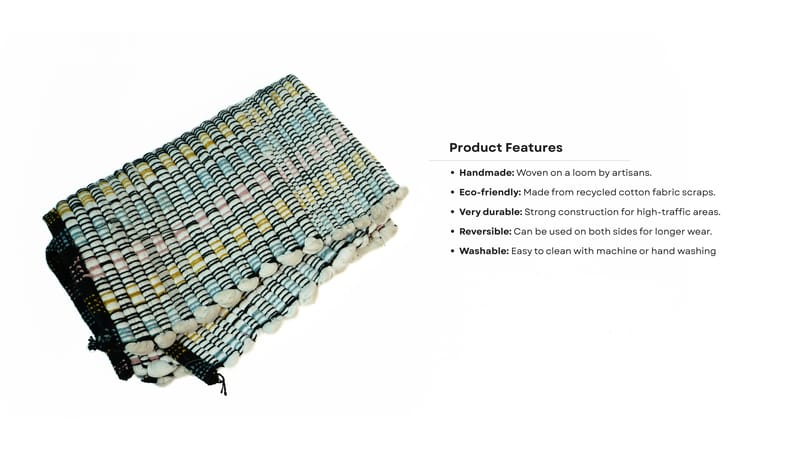
The reversible construction means both surfaces are usable, effectively doubling the lifespan of the mat. When one side shows wear, the mat is simply flipped.
Where to place it
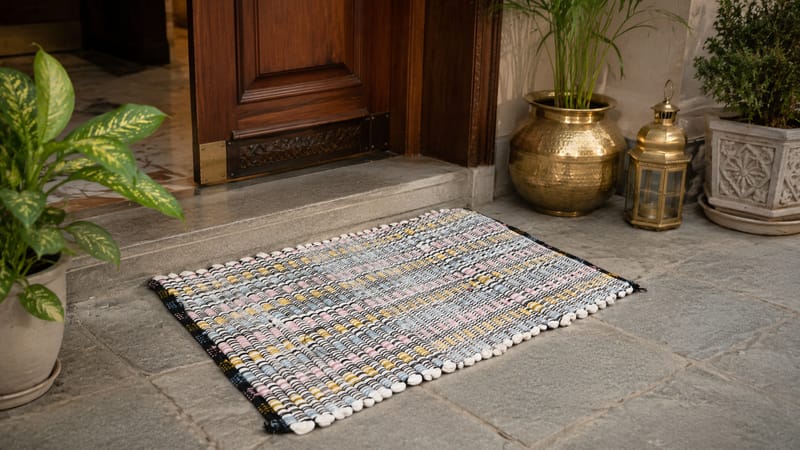
The most natural placement is the main entrance — outside the front door to clean footwear before entering, or inside just past the threshold. In Indian homes where footwear is removed at the door, a Paypusani at the entrance is a daily-use object rather than an occasional one. It also works at the kitchen entrance, the bathroom doorway, or at the back door where outdoor footwear typically comes off.
Its natural, understated colour palette — white, blue, mustard, and pink on black — suits most entrance aesthetics without demanding attention. It is an object that looks right in a simply furnished home as well as a more decorated one.
Why a handwoven cotton mat is worth choosing
Machine-made synthetic doormats are cheaper and widely available. They do not absorb moisture well, they hold heat in summer, and they do not last as long as their initial firmness suggests. A cotton chindi mat made on a loom from recycled cloth is more absorbent, more breathable, and improves slightly with washing as the cotton softens. It is also made from material that would otherwise be discarded — a quality that matters for households that think about what they bring into their homes.
Specifications
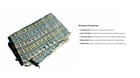
Material: Recycled cotton fabric strips (chindi), cotton thread warp, rubber base thread
Weave: Chindi/rag-rug loom weave
Warp colour: Black
Strip colours: White, cream, pale blue, mustard yellow, blush pink
Edge finish: Knotted/looped white cotton fringe on two sides
Net Weight: 300 g
Reversible: Yes
Suitable for: Main entrance, kitchen doorway, bathroom, indoor threshold placement
Care
Hand wash or gentle machine wash in cold water. The cotton strips may release slight colour in the first wash — wash separately. Do not use harsh detergents or bleach, which can weaken the cotton warp over time. Lay flat or hang to dry in shade — do not tumble dry. Shake out dust regularly between washes. The fringe ends should be straightened after washing before the mat dries.
Hand wash or gentle machine wash in cold water. The cotton strips may release slight colour in the first wash — wash separately. Do not use harsh detergents or bleach, which can weaken the cotton warp over time. Lay flat or hang to dry in shade — do not tumble dry. Shake out dust regularly between washes. The fringe ends should be straightened after washing before the mat dries.
About the Entrepreneur
Hema Tai has been in the doormat business for 10 years. She had a love for making doormats. Initially she made them from discarded clothes. Due to high demand for her business, she started making various types of doormats.
She received packaging and branding from Mann Deshi along with online marketing.
| Country of origin | India |
|---|---|
| colour | #FFFFFF |
| brand | Suvida Creation |
| material | COTTON |
| colour name | #FFFFFF |
| cancellable | yes |
| contact details consumer care | Vanita Shinde,[email protected],9607589078 |
| return window | 2 days |
| seller pickup return | yes |
| common or generic name of commodity | Handcrafted Door Mat | Durable Non-Slip Entrance Floor Mat | Indoor & Outdoor Use (Paypusani) |
| manufacturer or packer address | Manndeshi Foundation, Desai Complex, vasatrav naik chowk, Nanded bypas, latur 413514 |
| manufacturer or packer name | Suvida Creation |
| month year of manufacture packing import | 46143 |
| imported product country of origin | IN |
| time to ship | 2 days |
Other Products from seller Mann Deshi Udyojika Private Limited
Check Estimated Delivery Date

Sold By: Mann Deshi Udyojika Private Limited
Vendor Source:Mann Deshi Udyojika Private Limited