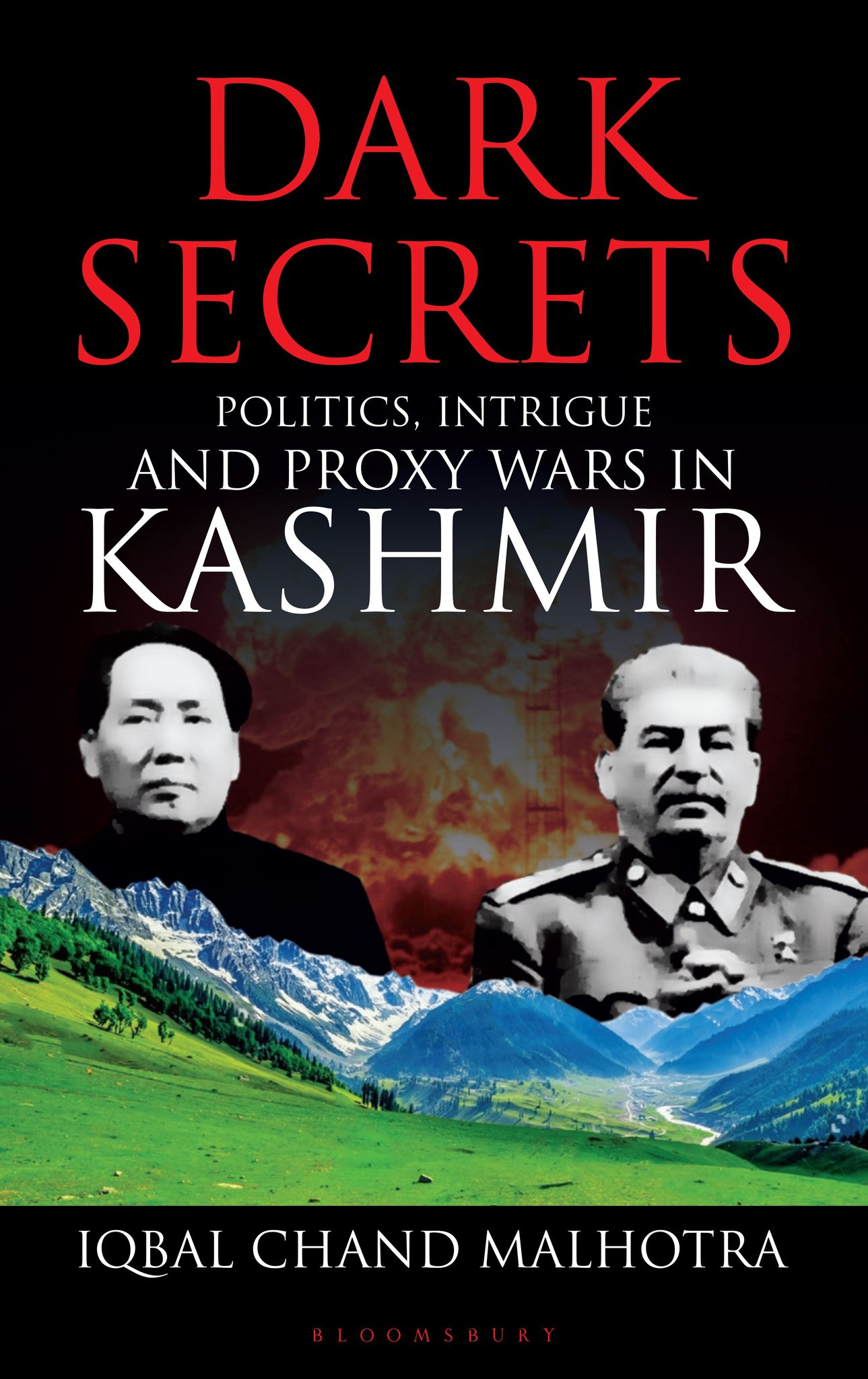

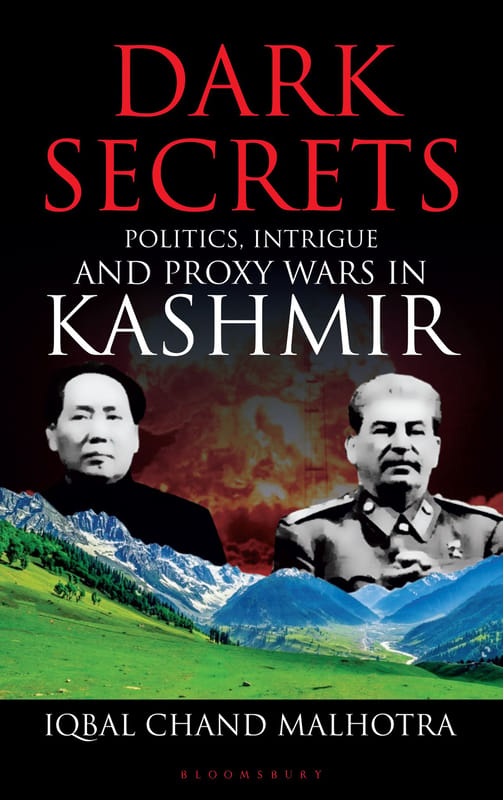
Was Britain spying on Soviet nuclear activities in Soviet Kazakhstan and Sinkiang from Gilgit between 1945 and 1955? Did MI6 conduct regular military reconnaissance flights over Soviet Russia from airbases in Pakistan?
Was the Partiti...
विक्रेता
Dark Secrets
मुख्य विशेषताएं
| उद्गम देश | भारत |
|---|---|
| ब्रैंड | Bloomsbury |
| शुद्ध मात्रा | 1 piece |
| निर्माता या पैकर का नाम | Bloomsbury India |
Was Britain spying on Soviet nuclear activities in Soviet Kazakhstan and Sinkiang from Gilgit between 1945 and 1955? Did MI6 conduct regular military reconnaissance flights over Soviet Russia from airbases in Pakistan?
Was the Partition of India advanced so that British nuclear monitoring bases in the Gilgit Agency could be secured?
Did India and Pakistan fight ‘The First Kashmir War’ because it suited British interests?
Did Joseph Stalin order Mao Tse-tung to invade Aksai Chin to speed up the extraction of uranium ores for the Soviet nuclear bomb?
Was Mao’s intrusion into Aksai Chin in 1950 a consequence of Stalin’s urgency to extract and transport uranium from this region?
Did India ever realise it faced a British and Russian fait accompli in Kashmir?
Dark Secrets is an investigative account that uniquely reexamines India’s contemporary history about the Kashmir conflict and its foreign relationships with Britain, Soviet Russia, Pakistan and China. It reveals the convoluted nature of British policy in the Indian subcontinent and how it impacted both India and Pakistan. The history of the Kashmir conflict now needs to be repositioned in terms of the British necessity to secure under its continuing control as much of the Gilgit Agency and North-West Frontier Province at the time of Partition as was possible to follow the progress of the Soviet nuclear bomb. This was essential if Britain was to secure a foothold in the nuclear club. Further, the Soviets exerted pressure on China to occupy Aksai Chin for its nuclear-related minerals. Stalin hoped to achieve this through Mao, exploiting both Sinkiang’s and Kashmir’s natural resources to become a nuclear power.
As India celebrates its 75th year of independence, this book reveals the dark secrets hidden in India’s contemporary history around and after the Partition of India with major international players vested in the future of Kashmir.
Was the Partition of India advanced so that British nuclear monitoring bases in the Gilgit Agency could be secured?
Did India and Pakistan fight ‘The First Kashmir War’ because it suited British interests?
Did Joseph Stalin order Mao Tse-tung to invade Aksai Chin to speed up the extraction of uranium ores for the Soviet nuclear bomb?
Was Mao’s intrusion into Aksai Chin in 1950 a consequence of Stalin’s urgency to extract and transport uranium from this region?
Did India ever realise it faced a British and Russian fait accompli in Kashmir?
Dark Secrets is an investigative account that uniquely reexamines India’s contemporary history about the Kashmir conflict and its foreign relationships with Britain, Soviet Russia, Pakistan and China. It reveals the convoluted nature of British policy in the Indian subcontinent and how it impacted both India and Pakistan. The history of the Kashmir conflict now needs to be repositioned in terms of the British necessity to secure under its continuing control as much of the Gilgit Agency and North-West Frontier Province at the time of Partition as was possible to follow the progress of the Soviet nuclear bomb. This was essential if Britain was to secure a foothold in the nuclear club. Further, the Soviets exerted pressure on China to occupy Aksai Chin for its nuclear-related minerals. Stalin hoped to achieve this through Mao, exploiting both Sinkiang’s and Kashmir’s natural resources to become a nuclear power.
As India celebrates its 75th year of independence, this book reveals the dark secrets hidden in India’s contemporary history around and after the Partition of India with major international players vested in the future of Kashmir.
| उद्गम देश | भारत |
|---|---|
| ब्रैंड | Bloomsbury |
| साधारण नाम | Books |
| शुद्ध मात्रा | 1 piece |
| निर्माता या पैकर का नाम | Bloomsbury India |
| निर्माता या पैकर का पता | 2nd Floor, Building no.4, C-6&7, No, DDA Complex, Pocket 6, Sector C, Vasant Kunj, New Delhi, Delhi 110324 |
| निर्माण तिथि | As per product batch |
| आईएसबीएन | 9789356409736 |
विक्रेता के अन्य उत्पाद रूपा पब्लिकेशन इंडिया प्राइवेट लिमिटेड

₹145₹195 ( 26% बंद )
₹215₹295 ( 27% बंद )
₹631₹895 ( 29% बंद )
₹495₹699 ( 29% बंद )
₹145₹195 ( 26% बंद )
₹354₹495 ( 28% बंद )