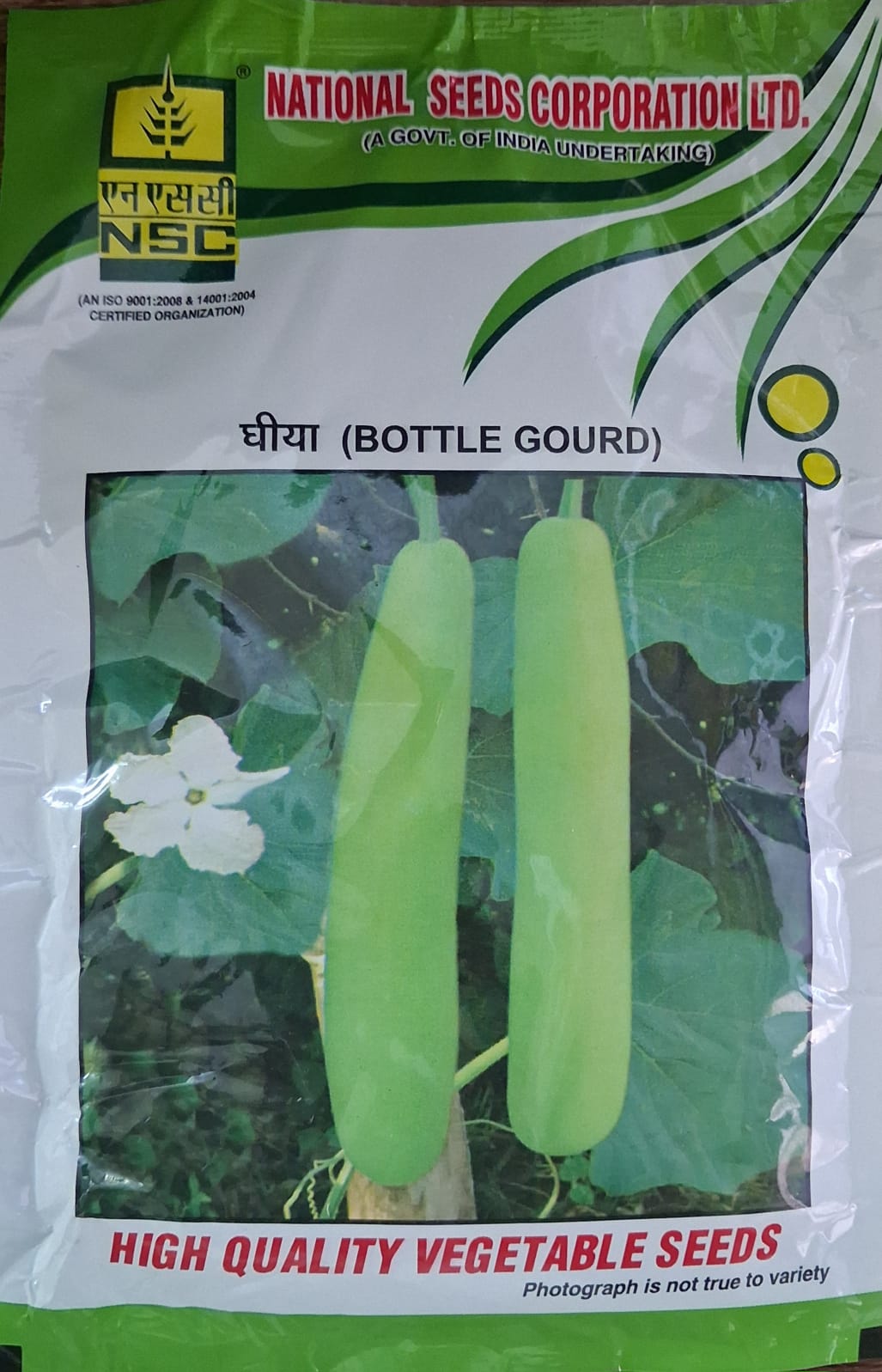

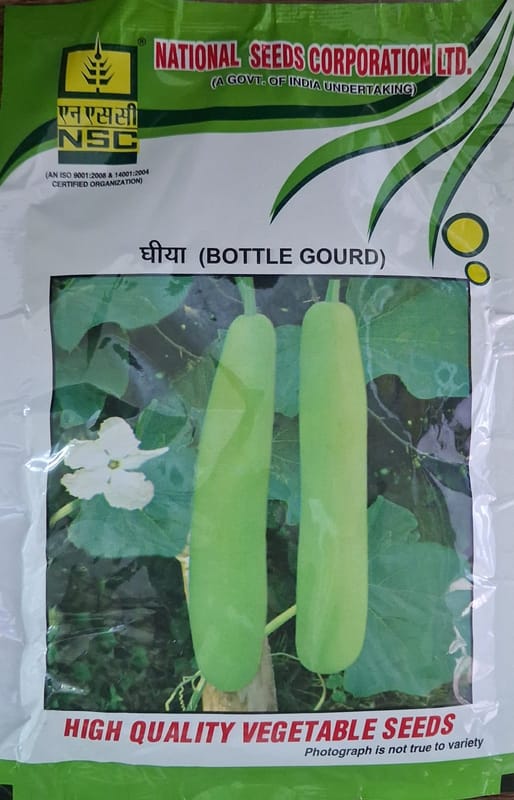
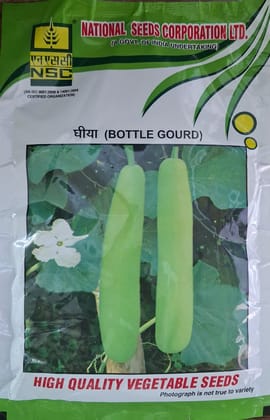
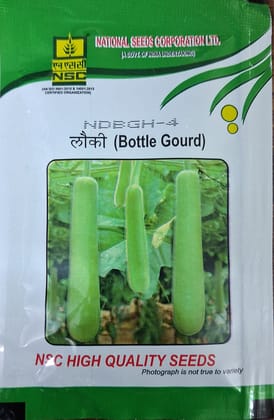
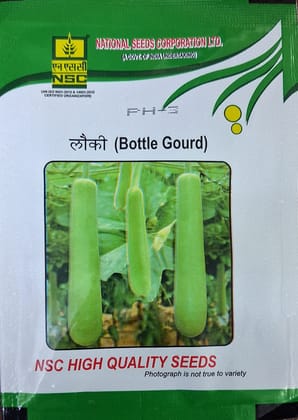
- The PN variety of bottle gourd (Lagenaria siceraria) is a popular, high-yielding, open-pollinated variety developed by the National Seeds Corporation (NSC) in India.
- Renowned for its fast-growing, vigorous trailing vines, i...
Key Attributes
| Country of origin | India |
|---|---|
| Brand | NSC |
| Net Quantity | 50 gram |
| Product Dimensions | 10L x 3W x 10H cm |
| Manufacturer or packer name | NSC Jodhpur |
- The PN variety of bottle gourd (Lagenaria siceraria) is a popular, high-yielding, open-pollinated variety developed by the National Seeds Corporation (NSC) in India.
- Renowned for its fast-growing, vigorous trailing vines, it produces uniform, smooth-skinned, light green fruits with tender and highly digestible flesh.
- Well-suited for both the summer (February to March) and monsoon (June to July) sowing seasons, this variety thrives best in well-drained sandy loam soil rich in organic matter with a pH of 6.5 to 7.5.
- Cultivation typically requires a seed rate of 4 to 5 kg per hectare, sown at a depth of 2 to 3 cm with 2.0 to 2.5 meters between rows and 45 to 60 cm between plants.
- Under good management and trellis support, farmers can achieve an impressive expected yield of 25 to 35 tonnes per hectare (around 10 to 14 tonnes per acre), provided the fruits are harvested regularly while still young and tender to encourage continuous fruit set.
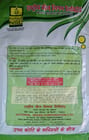
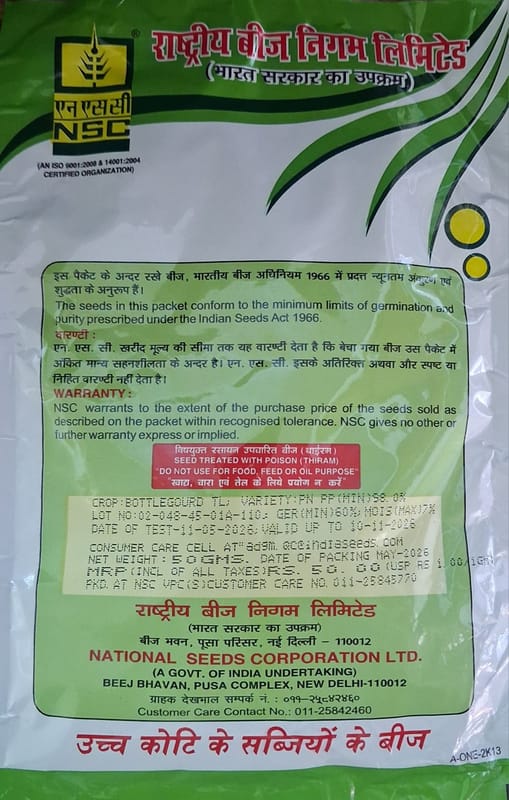
| Country of origin | India |
|---|---|
| Brand | NSC |
| Common name | LOKI |
| Net Quantity | 50 gram |
| Batch number | 02-048-45-01A-110 |
| Expiry Date | 26-11-2026 |
| Weight | 50 g |
| Package Dimension | 10L x 3W x 10H cm |
| Product Dimensions | 10L x 3W x 10H cm |
| Manufacturer or packer name | NSC Jodhpur |
| Manufacturer or packer address | D-14,Subji Mandi (Paota) Jodhpur- 342001 |
| Manufacturing Date | MAY-2026 |
| contact details consumer care | NSC Jodhpur, [email protected] |
Other Products from seller NSC Jodhpur
₹40₹51 ( 22% OFF )
₹40₹50 ( 20% OFF )
₹60₹70 ( 14% OFF )
₹50₹77 ( 35% OFF )
₹80₹100 ( 20% OFF )
₹30₹35 ( 14% OFF )
₹100₹150 ( 33% OFF )
₹30₹35 ( 14% OFF )
₹60₹76 ( 21% OFF )
₹30₹35 ( 14% OFF )
₹110₹150 ( 27% OFF )
₹815₹1,000 ( 19% OFF )
₹150₹200 ( 25% OFF )
₹30₹50 ( 40% OFF )
₹200₹250 ( 20% OFF )
