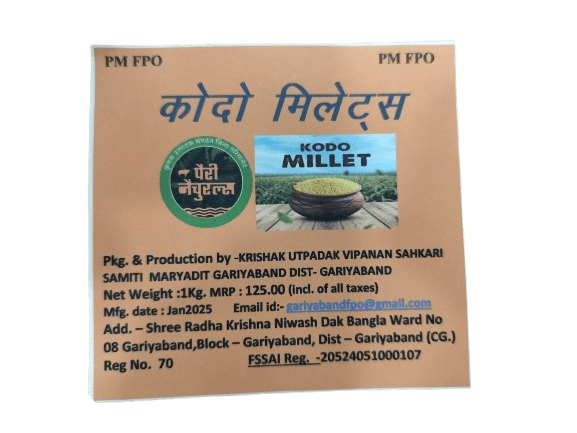

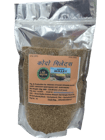
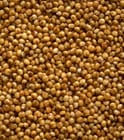
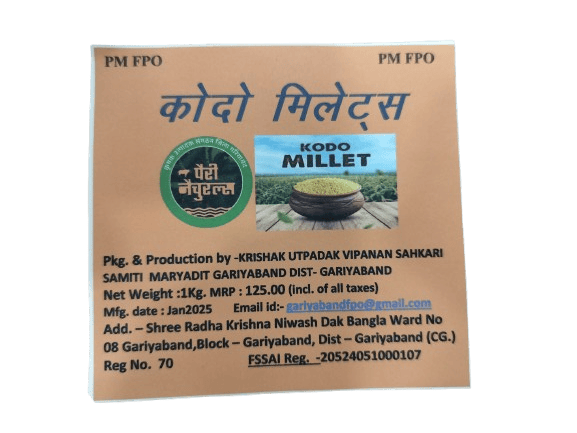
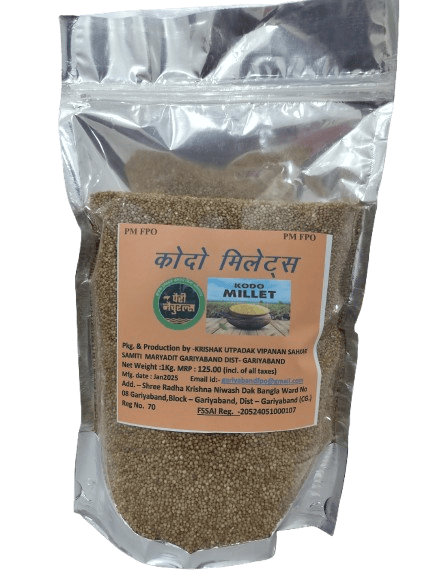
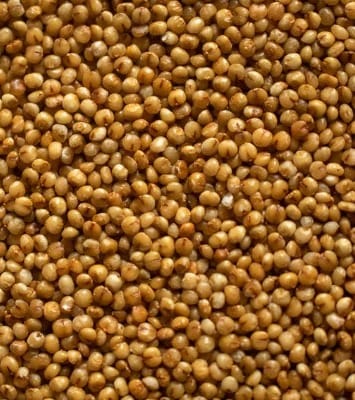
Kodo millet, scientifically known as Paspalum scrobiculatum, is a highly nutritious and drought-resistant cereal grain. It is an ancient crop widely grown in India...
Read MoreKodo Millets
Key Attributes
| Country of origin | India |
|---|---|
| Net Quantity | 1 kilogram |
| Manufacturer or packer name | Krishak Utpadak Vipadan Sahkari Samiti Maryadit , Vikaskhand Gariyaband |
Kodo millet, scientifically known as Paspalum scrobiculatum, is a highly nutritious and drought-resistant cereal grain. It is an ancient crop widely grown in India and parts of Africa. It belongs to the Poaceae (grass) family and is commonly cultivated in arid and semi-arid regions due to its ability to withstand harsh climatic conditions.
2. Physical Characteristics
-
Small, round grains with a light brown or grayish color.
-
Hardy and requires minimal water for cultivation.
-
Short-duration crop (about 3-4 months).
3. Nutritional Value (per 100g of Kodo Millet)
-
Carbohydrates: ~65-70g
-
Protein: ~8-12g
-
Fiber: ~9g
-
Fat: ~3-4g
-
Minerals: Rich in iron, calcium, potassium, and magnesium
-
Vitamins: Contains B-complex vitamins, especially niacin (B3)
4. Health Benefits
-
Gluten-Free: Suitable for people with gluten intolerance and celiac disease.
-
Rich in Dietary Fiber: Helps in digestion and prevents constipation.
-
Diabetes Management: Has a low glycemic index, which helps in controlling blood sugar levels.
-
Weight Management: High fiber content keeps you full for longer, aiding in weight loss.
-
Heart Health: Reduces cholesterol levels and promotes cardiovascular health.
5. Cultivation & Growing Conditions
-
Grows well in rainfed, dryland farming systems.
-
Requires moderate rainfall (500-800 mm) and well-drained sandy or loamy soil.
-
Can be grown in marginal lands where other crops fail.
-
Sowing is usually done in June-July (Kharif season).
-
Maturity period: 90-120 days.
| Country of origin | India |
|---|---|
| Common name | Paspalum scrobiculatum |
| Net Quantity | 1 kilogram |
| Expiry Date | 01/2026 |
| Package Dimension | 8L x 10W x 20H cm |
| Manufacturer or packer name | Krishak Utpadak Vipadan Sahkari Samiti Maryadit , Vikaskhand Gariyaband |
| Manufacturer or packer address | Shree Radha Krishna Niwash Dak Bangla, Ward No. 08, Gariyaband, Pincode-493889 |
| Manufacturing Date | 01/2025 |
| contact details consumer care | Krishak Utpadak Vipnan Sahkari Samiti Maryadit, [email protected] |
Other Products from seller Krishak Utpadak Vipnan Sahkari Samiti Maryadit
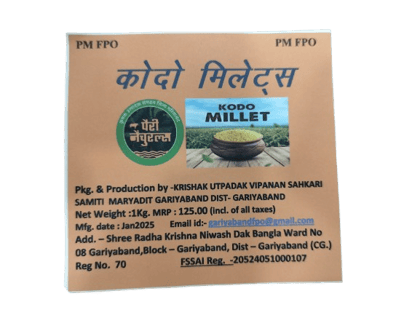
₹100₹125 ( 20% OFF )
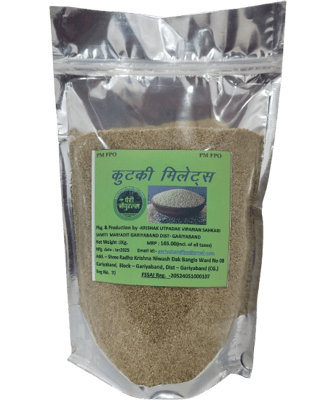
₹145₹165 ( 12% OFF )
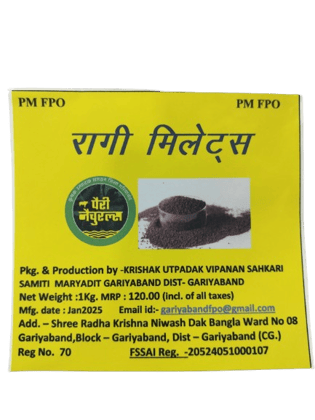
₹100₹120 ( 17% OFF )